

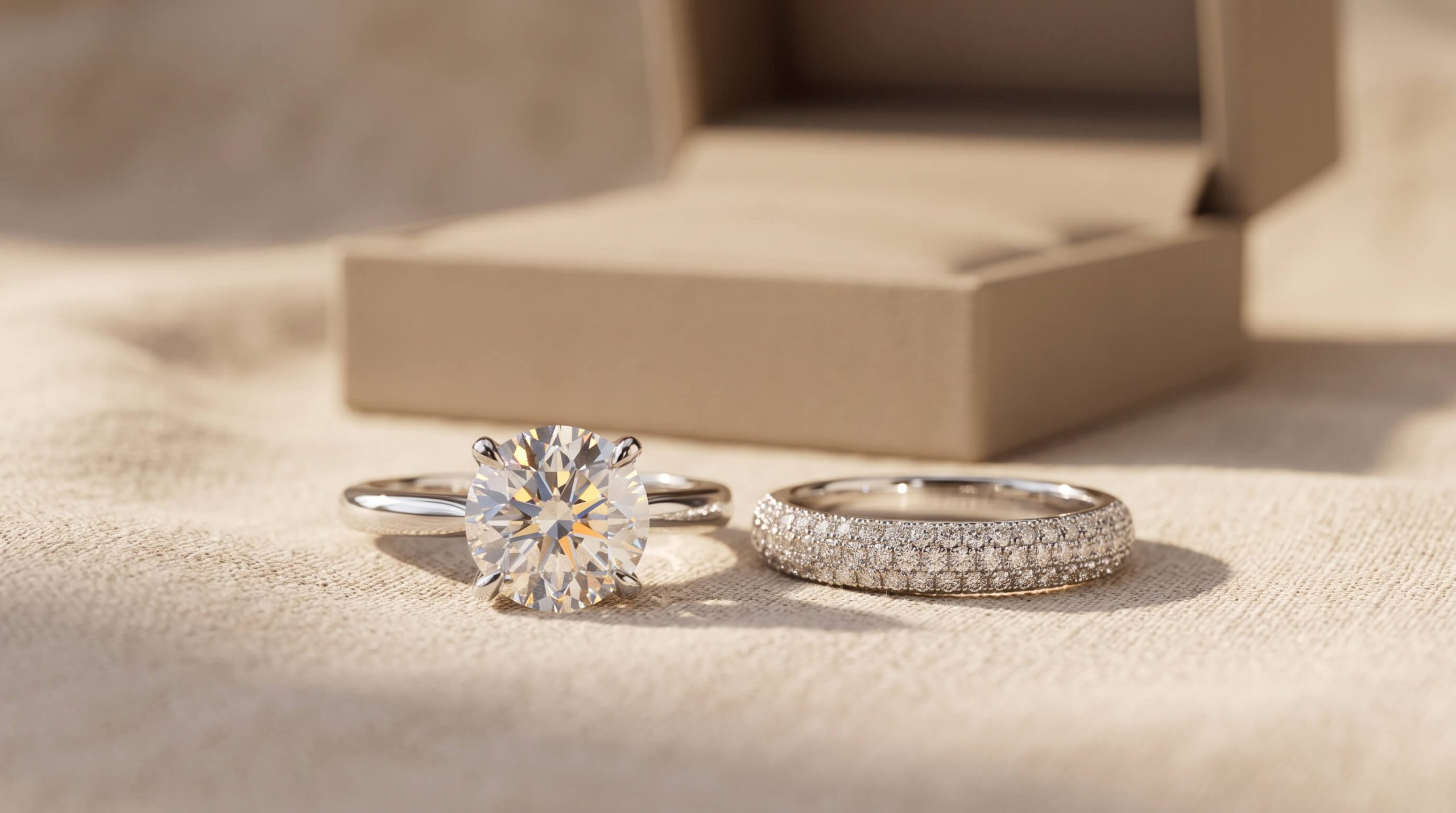
When shopping for diamond jewelry today, you will quickly notice two terms on the market: natural mined diamonds and laboratory-grown diamonds. For many gift-givers, this raises immediate questions: Are they made of the same material? Do they hold up over time? And which one makes the better gift?
Understanding the key differences helps you choose a piece that feels both meaningful and practical.
The Material and Science: Identical at the Atomic Level
A common misconception is that a laboratory-grown diamond is a substitute or imitation, like cubic zirconia or moissanite. That is not the case.
Both natural mined diamonds and laboratory-grown diamonds consist of pure crystallized carbon arranged in a tight cubic lattice. Whether formed deep within the earth over billions of years or grown in a specialized laboratory using high-pressure, high-temperature (HPHT) or chemical vapor deposition (CVD) methods, the resulting crystal structure is identical.
Because the underlying material is identical, laboratory-grown diamonds share the exact same physical and optical characteristics as mined diamonds:
- Maximum Hardness: Both measure a perfect 10 on the Mohs hardness scale. This means a laboratory-grown diamond will never scratch from daily wear, cloud over, or degrade with time.
- Optical Brilliance: Both exhibit the exact same refractive index (2.42) and dispersion rate, giving them identical fire, brilliance, and scintillation under light.
- Grading Standards: Major gemological institutions, such as the Gemological Institute of America (GIA) and the International Gemological Institute (IGI), inspect, grade, and laser-inscribe laboratory-grown diamonds using the classic Four Cs: Cut, Color, Clarity, and Carat weight.
To the naked eye—and even under a standard jeweler's 10x magnification loupe—the two cannot be distinguished. Only specialized laboratory spectrometry equipment can detect the subtle growth patterns that identify how each stone originated.
The Modern Shift: Wearing and Enjoying Over Speculating
In recent years, buyer behavior in the jewelry market has evolved significantly. While previous generations often viewed diamonds primarily through the lens of geological rarity or heirloom investment assets, modern shoppers view jewelry as something to be worn, celebrated, and enjoyed every single day.
Natural mined diamonds carry a rarity premium tied directly to the extensive mining, extraction, and geological scarcity required to bring them to market.
Laboratory-grown diamonds, on the other hand, eliminate the costly extraction process. As a result, they offer shoppers a compelling practical advantage: visual scale and quality at an accessible price point.
Instead of compromising on stone size or settling for lower color and clarity to fit a budget, gift-givers can select a substantially larger carat weight and exceptional cut for the same spend. You receive the full, unmistakable impact of a brilliant diamond without the steep geological markup.
Which Option Is Right for You?
Both choices result in a stunning, durable piece of fine jewelry designed to last a lifetime. The best decision simply comes down to what matters most to you and the person receiving the gift:
- Choose a natural mined diamond if you place high value on ancient geological heritage, rare earth-formed origin, and traditional milestone symbolism.
- Choose a laboratory-grown diamond if your priority is maximum visual sparkle, larger carat size, and everyday wearability that delivers exceptional value.
Ultimately, fine jewelry is about how the piece makes someone feel when they open the box. Both natural and laboratory-grown diamonds deliver the enduring brilliance and lifelong durability that make any gift truly unforgettable.

0 Comments